

Many medical treatments are hard on the skin. People going through them often describe skin that has become suddenly very dry, tight, fragile or sensitive to products it previously tolerated without a thought. If that's you, or someone you love, I want to say first: this is common, it is not your fault, and small comforts genuinely help.
This subject is personal for me. εὖSKIN exists because I watched my sister go through treatment for ovarian cancer, and saw what it left on her skin — and how few products existed to bring her any comfort. What follows is the guide I wish we'd had. It is not a treatment plan. Your medical team's advice always comes first, and they know your situation in ways an article never can. This is simply a framework for thinking about gentle skincare at a time when standing in a pharmacy aisle reading labels is the last thing you have energy for.
Start with one conversation
Before changing anything about your skincare, ask your treating team three questions:
- Are there any ingredients or product types I should avoid during my treatment?
- Is there anything specific you recommend for the dryness or sensitivity I'm experiencing?
- Are there areas of my skin I should leave alone entirely (for example, treatment sites, dressings, or marked areas)?
Their answers override anything you read online, including this. Many treatment centres have specific skincare protocols, and some treatments come with product restrictions that really matter.
The comfort-first principles
With your team's go-ahead, these general principles guide gentle skincare when skin is very dry and fragile:
Less is more. This is not the season for ten-step routines or trying new actives. A gentle cleanse, consistent moisture, and sun protection when outdoors is a complete routine.
Nothing with added fragrance. Fragrance is one of the most common causes of stinging and irritation on fragile skin. Choose products made without synthetic fragrance or essential oils, and confirm on the ingredient list (no "parfum"). This applies to body wash and laundry products too, not just face cream.
Lukewarm, brief, gentle. Hot water and long showers strip the skin's natural oils. Wash with lukewarm water, pat rather than rub dry, and apply moisturiser to slightly damp skin, when it absorbs most comfortably.
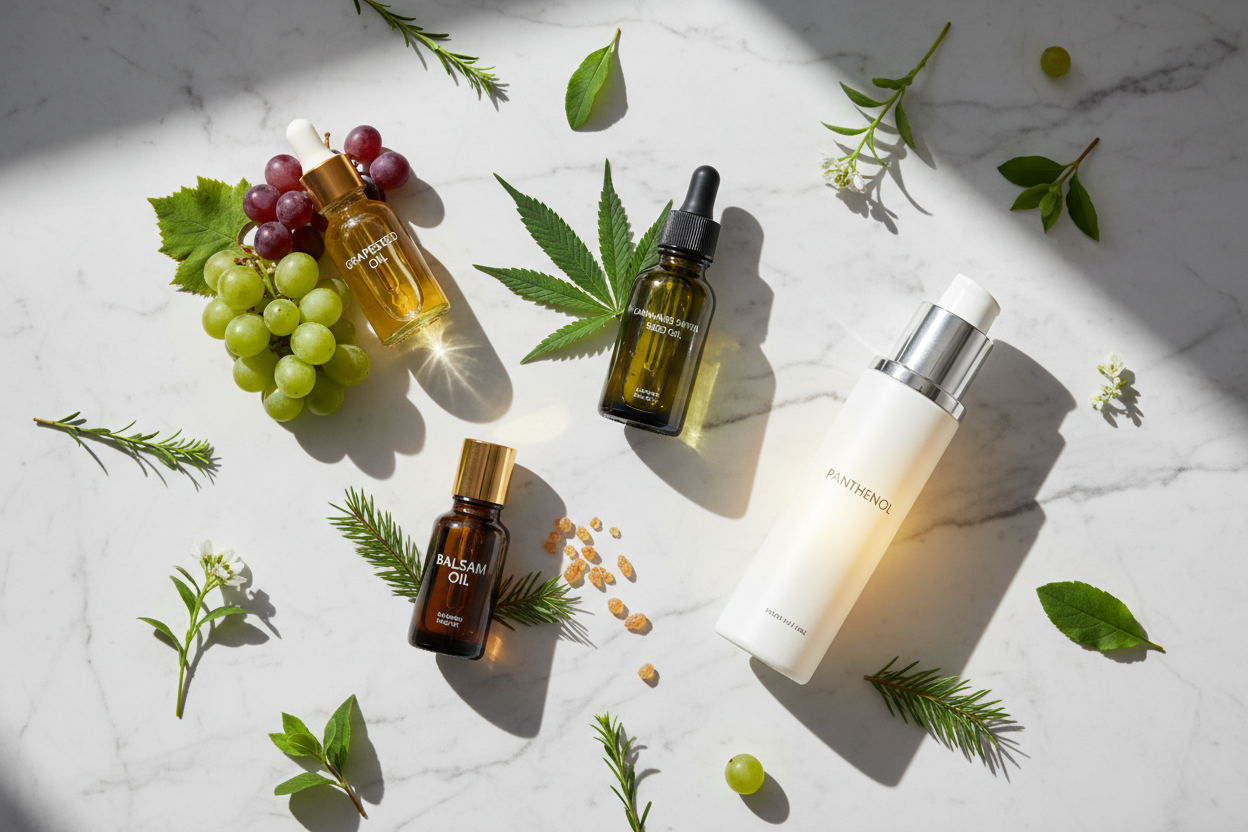
Moisturise generously and often. Skin that is very dry welcomes frequent moisturising, often more than once a day. Look for well-tolerated hydrators — hyaluronic acid and panthenol are two of the gentlest in cosmetic chemistry — and skin-conditioning plant oils that help skin feel soft and comfortable. Don't forget lips, which often become very dry too.
Handle skin like it's precious, because right now it is. Skip exfoliants, scrubs, cleansing brushes and anything with a tingle. Soft towels, soft fabrics, gentle hands.
Protect from the sun. Some treatments make skin more sensitive to sunlight. Ask your team about sun protection, and favour covering up and shade alongside a sunscreen suited to sensitive skin.
When to call your care team
Skincare is for comfort. Some skin changes during treatment need medical eyes, promptly: rashes, blistering, broken or weeping skin, signs of infection, severe itching, or any skin change your team asked you to report. When in doubt, call. That's what they're there for, and no question is too small.
Choosing products, with your team's blessing
If your team is happy for you to use general cosmetic moisturisers, the checklist is short: no added fragrance, a short and fully disclosed ingredient list, no exfoliating acids, textures rich enough to keep skin comfortable between applications, and gentle application.
This checklist is, quite literally, the design brief εὖSKIN was founded on. Every formula is built around one question — will skin at its most reactive tolerate this? — with hydrators like hyaluronic acid and panthenol, gently behaved botanicals like aloe and calendula, and a standing exclusion list: no synthetic fragrance, no essential oils, no drying alcohols, no parabens, no sulphates. The Recovery Oil offers targeted comfort where skin feels it most, the Intensive Skin Gel and Intensive Cream provide the daily moisture, the Soothing All Over Body Lotion covers larger areas, and the Hydrating Lip Balm looks after lips.
If you'd like to consider them, take the ingredient list — published in full, with scientific references, on our Ingredients page — to your doctor, nurse or pharmacist and ask whether it's suitable for you. We'd genuinely rather you check than guess. If you've had a recent procedure, patch test first. And every order carries our 30-day no-questions guarantee, because the last thing anyone needs right now is a purchase they're stuck with.
A last word
Skin is often the visible part of an invisible ordeal, and caring for it can be one small, kind, controllable thing in an uncontrollable time. Be as gentle with yourself as you are with your skin. And lean on your care team; they want to help with this part too.
Note: Please note that the information provided here does not replace the guidance and information that your doctor has provided you. If you would like more information please speak to your doctor or reach out to our medical team with any questions.


