

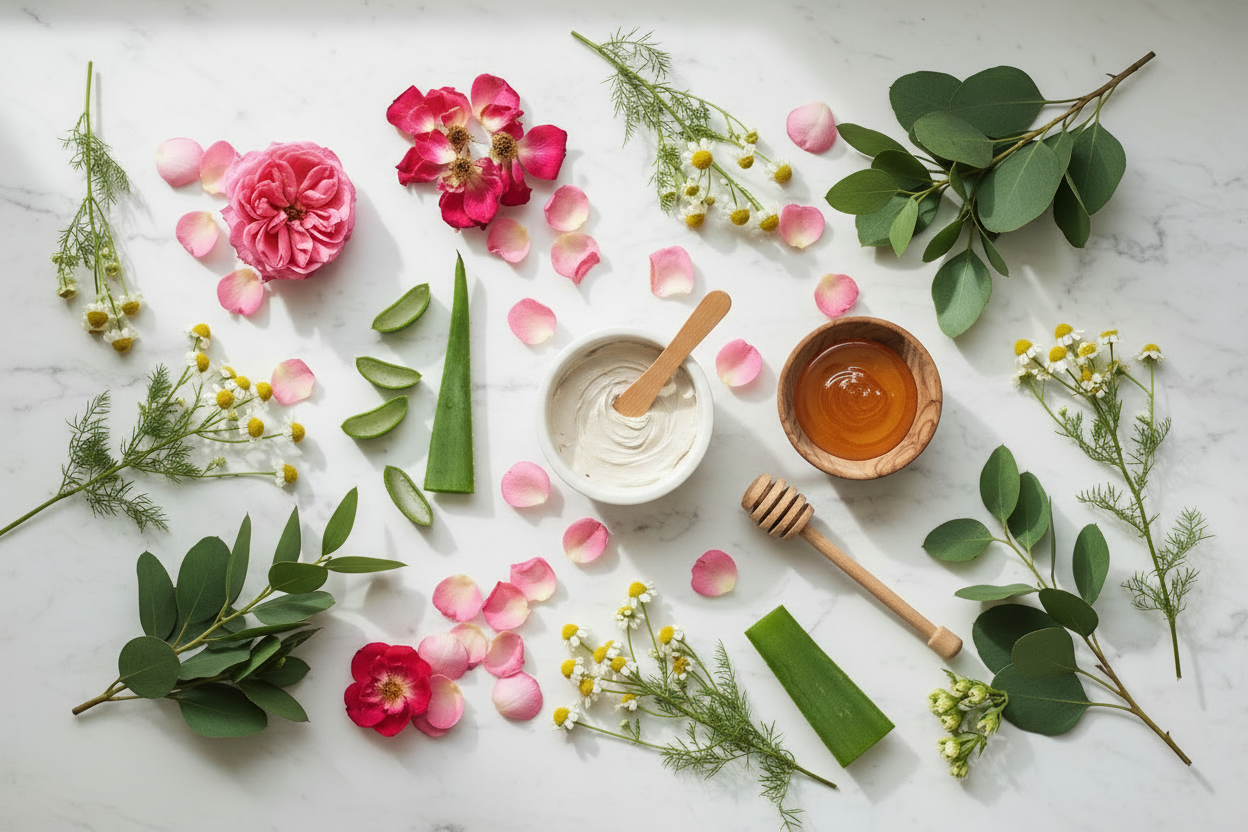
People with sensitive skin read ingredient lists the way lawyers read contracts, and honestly, I think that's exactly the right instinct. The ingredient list is the only part of a skincare product that can't spin. The front of the pack is marketing; the back of the pack is disclosure.
The catch is that INCI (International Nomenclature of Cosmetic Ingredients) names look like a chemistry exam. So let me teach you to read one, and then, in the interests of practicing what we preach, I'll walk you through the ingredients we use at εὖSKIN and why each one is there.
The three rules of reading an INCI list
Rule 1: Order means concentration — down to 1%. Ingredients above 1% must be listed in descending order by amount. Below 1%, they can appear in any order. In practice, the first five or six ingredients are the formula; everything after the preservative is usually present in small amounts.
Rule 2: Scary-sounding is not the same as harmful. "Butyrospermum parkii" is shea butter. "Cannabis sativa seed oil" is hemp seed oil — pressed from seeds, rich in skin-conditioning fatty acids, and nothing to raise an eyebrow at. INCI names are standardised Latin and chemical nomenclature, not a warning label. Equally, friendly-sounding ingredients can be common irritants. Judge by function and evidence, not by vibe.
Rule 3: What's missing is as informative as what's present. For sensitive skin, the absence of "parfum/fragrance", fragrant essential oils, sulphates and drying alcohols tells you more than any front-of-pack claim.
A quick functional glossary
Most cosmetic ingredients fall into a handful of roles:
- Humectants draw water into the skin's outer layers: hyaluronic acid (sodium hyaluronate), panthenol, glycerin.
- Emollients soften, smooth and condition: plant oils like grapeseed and hemp seed, butters like shea.
- Film-formers and peptides improve surface feel: hydrolysed collagen.
- Soothing botanicals bring comfort to reactive skin: aloe, calendula, cucumber, chamomile extract.
- Antioxidant botanicals support skin's feeling of resilience against everyday environmental stress: plant phenolics and flavonoid-rich extracts.
- Emulsifiers, texture agents, preservatives and pH adjusters hold the formula together, keep it safe to use for its full shelf life, and keep it skin-compatible. A preserved product is a safe product; "preservative-free" water-based formulas are a microbiology problem waiting to happen.
The εὖSKIN ingredients, one by one
Every ingredient below appears in our formulas for a stated reason, with the supporting scientific references published on our Ingredients page. (For publication: insert the full INCI list from each product label beneath this section so readers can match every line; the key functional ingredients are walked through here.)
Hyaluronic acid. A sugar molecule naturally present in skin and the gold standard of surface hydration. It holds many times its weight in water, plumping the look of dry skin and giving our formulas their cushiony glide. In the Intensive Cream, Intensive Gel and Soothing Body Lotion.
Panthenol (pro-vitamin B5). One of the best-tolerated softening ingredients in cosmetic chemistry. It smooths the surface of skin and supports its moisture-barrier feel. In the Intensive Cream and Soothing Body Lotion.
Hydrolysed collagen. Small-chain collagen peptides rich in Gly-Pro-Hyp amino acids that bind moisture at the skin's surface, lending a silky finish and a smoother look and feel on application. In the Intensive Cream, Intensive Gel and Soothing Body Lotion.
Gynura procumbens. A South-East Asian leaf rich in plant phenolics — our signature botanical, chosen because reactive skin tolerates it exceptionally well and its phenolics help skin feel resilient against everyday environmental stress. Across the core range.
Ganoderma lucidum. A mushroom with a long history in traditional East Asian skincare, and our gentlest soothing botanical — it sits comfortably on skin that reacts to almost everything else. Across the core range.
Aloe barbadensis leaf extract. The gel from inside the aloe leaf, used for centuries for its cool, calming feel. It brings an immediate sense of comfort to skin that feels hot, tight or irritated.
Cannabis sativa (hemp) seed oil. A lightweight plant oil naturally rich in fatty acids that condition skin and help it feel softer, more comfortable and less reactive. No, it isn't what you're thinking — hemp seed oil is a skincare workhorse, full stop.
Grapeseed oil. Light and fast-absorbing, chosen for how comfortably it sits on reactive skin, and naturally rich in plant antioxidants such as gallic acid.
Calendula officinalis. Marigold flower extract, one of the oldest soothing botanicals in skincare, adding a quietly comforting feel to formulas designed for skin that's been through a lot.
Cucumber extract. A naturally cooling, hydrating botanical. The kind of ingredient that earns its place by being gentle, not by being clever.
Chamomile extract. Rich in bisabolol-family molecules, and one of the most-tolerated soothing plants in cosmetic chemistry. In the Intensive Gel.
Balsam oil. A traditional botanical long used in European skincare for sensitive skin, bringing a calm, soothing character to our oil-based formulas.
Shea butter. A rich, plant-derived butter whose high fatty-acid content gives that immediately-comforted feeling — the heart of our Lip Balm.
What we deliberately leave out, and why
Every εὖSKIN formula excludes synthetic fragrance, fragrant essential oils, parabens, sulphates, drying alcohols, mineral oil and formaldehyde-releasers. Not because every one of those ingredients is dangerous in every context — dose and formulation matter — but because for skin that's dry, reactive or recovering, they add risk without adding function. When skin is at its most fragile, "probably fine" isn't a good enough standard. What's in it matters; what's not in it matters more.
Use this on every label you pick up
Next time you're evaluating a product, try this 30-second scan: check the first six ingredients for the workhorses, scan for parfum and fragrant essential oils, find the preservative (its presence is good news), and ask whether the brand can explain the rest — with references. If they can't, we can.
See every εὖSKIN ingredient, explained and referenced →


